

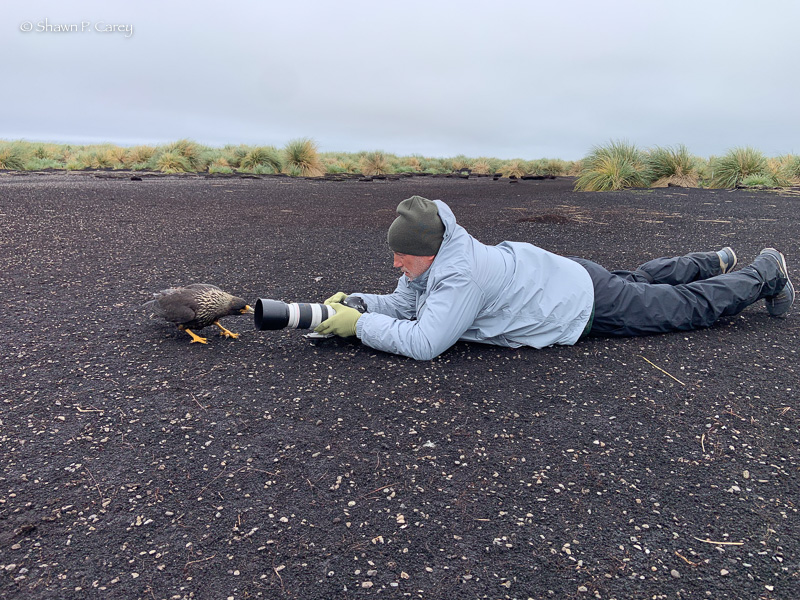
The final morning on Saunders Island at the Rookery Cabin we had one last surprise. A Striated Caracara landed right next to the cabin and was walking around. While I had seen two Striated Caracaras near the Rockhopper rookery I had no real photo opportunities. Unfortunately all of my camera equipment was packed away as we were waiting for our driver James to pick us up for the flight to Sea Lion Island. I made a snap decision and went for my Canon R3 with the Canon 100-500mm and got off a series of photos before the caracara flew off and before James arrived. As it turned out we would have many more great opportunities to photograph Striated Caracara in the days ahead.
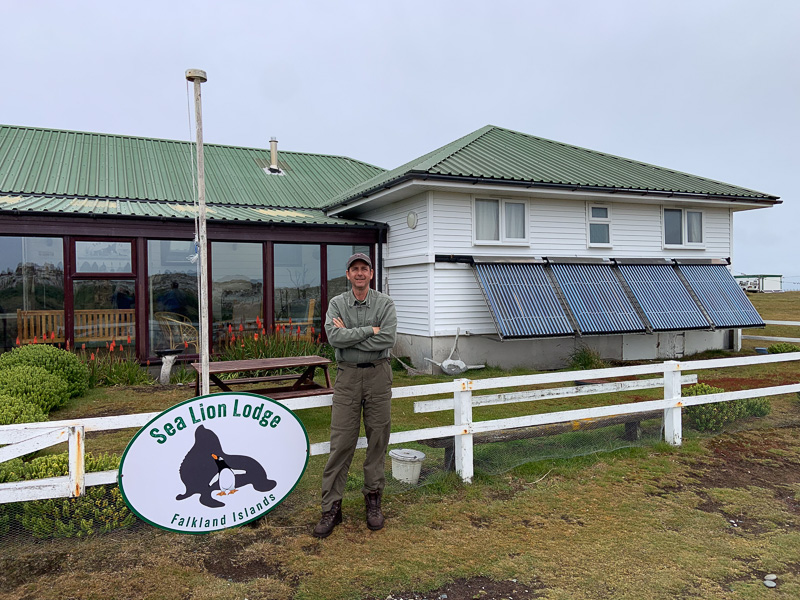
The interesting thing about traveling to any of the islands while you are in the Falklands is it’s done for there most part by plane via Falkland Islands Government Air Service (FIGAS). The distance between Saunders Island and Sea Lion Island is almost 90 miles and took just over one hour. We landed on Sea Lion air strip which is located next to the lodge. This would be the first location we stayed with people from other countries including the US. In terms of accommodations this was first rate, as good as anyplace I’ve stayed, the lodge can accommodate 20 guest. The rooms were very comfortable with two beds plus a private bath. It also had two common areas with a full bar where guest would relax and have a chance to mingle. It was a nice place to speak with people and share your reasons for being in the Falklands and on Sea Lion Island. In addition the food was quite good, with three meals plus afternoon snacks with coffee or tea. They also have a small gift shop where you can purchase various items including the book Birds & Mammals of the Falkland Islands, which I recommend if you are planning a trip there. Unlike Saunders Island, Sea Lion Island is not privately owned. It owned by the government and the lodge is leased by Micky Reeves and Sarah Crofts who operate the lodge along with seasonal staff from Chile. Check out their web site for more information.
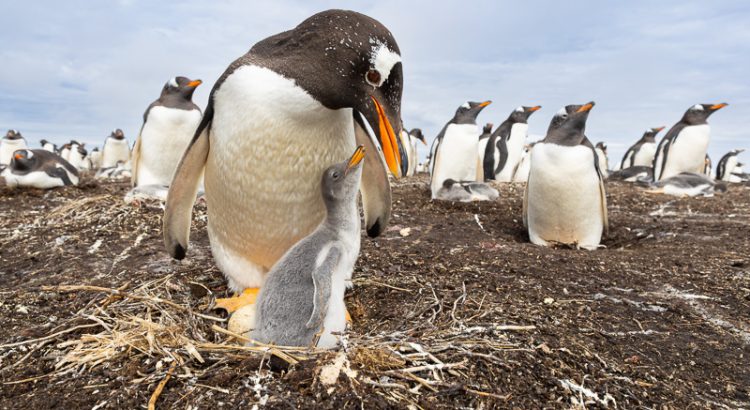
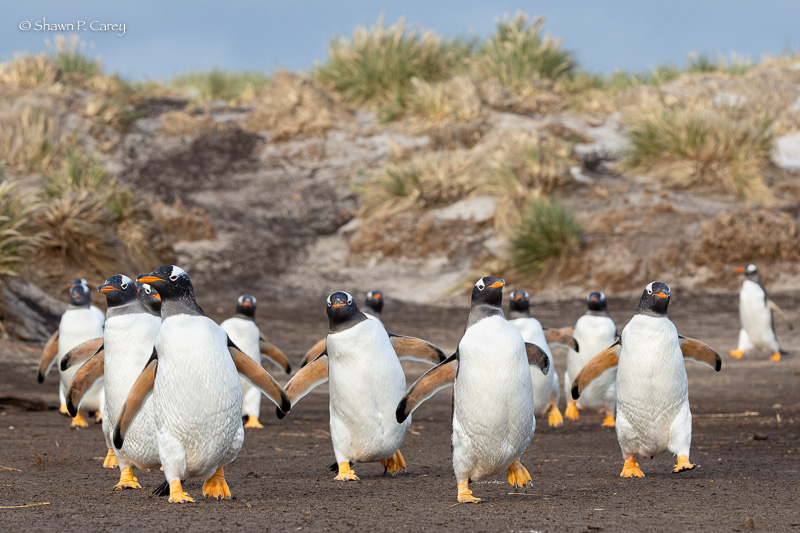
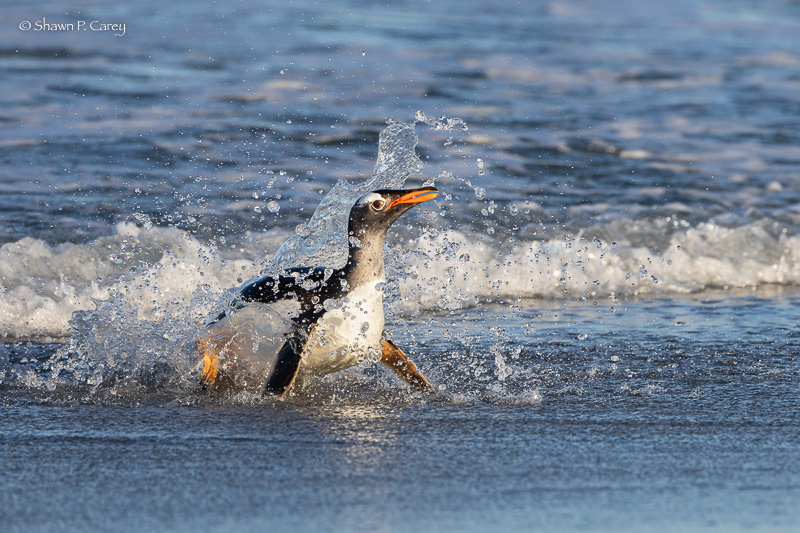
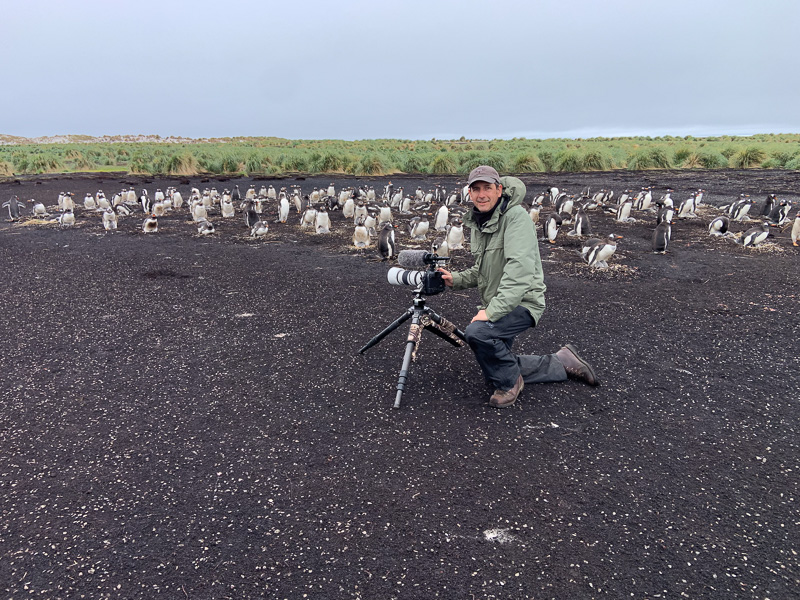
As for the wildlife photography it was simply outstanding. There are three Gentoo Penguin colonies on the island one of which, the smallest is maybe a two minute walk from the lodge. That’s where I recored one of my YouTube videos talking about photographing penguins on the Falkland Islands. I encourage you to watch that video to get a real sense of what it’s like to be sitting so near nesting penguins. The walk to this particular Gentoo colony is also the route which takes you to the North Beach. This beach offers some great photos during the afternoon with both Gentoo and Magellanic Penguins in the water and stumbling out as they hit the beach. Penguins are graceful swimmers and a joy to watch in the water. On the other hand they are comical as they emerge out of the ocean and begin to waddle along on solid earth. From the closest Gentoo colony leading towards North Beach there are two paths amongst the Tussac grass. The left side or path is for humans to walk and access the North Beach while the right side is referred to as the Penguin Highway. If you stand near these two paths you will soon see and understand it is in fact a Penguin Highway. You have penguins that are making their way from the beach back to the nesting colony, these birds are very clean from having just been in the ocean. Then you have penguins departing the colony making their way to the ocean. These birds are often somewhat dirty from the soil and bird droppings in and around the colony. To see a short video of the Penguin Highway check out my YouTube video recorded with a GoPro of Gentoo Penguins.
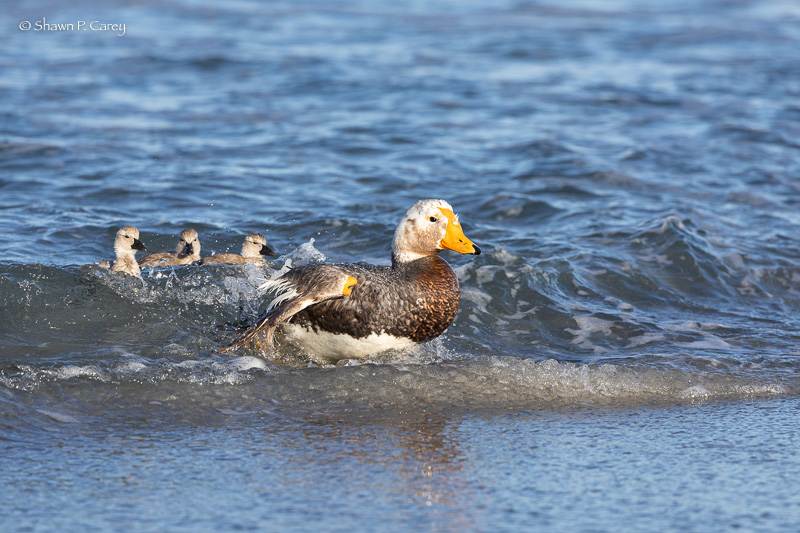
Another bird you will see on both North and South Beach are the flightless Falkland Steamer Ducks. Like many of the birds found on the Falklands they are very approachable with little fear of humans. When I departed Sea Lion Island I had seen and photographed five species of flightless birds: Gentoo Penguin, Magellanic Penguin, Southern Rockhopper Penguin, Macaroni Penguin and Falkland Steamer Duck.
Just before you make your way past the dunes onto North Beach you will encounter Southern Elephant Seals. By the time we arrived which was early December the largest of the breeding male Elephant Seals or “Beach Masters” had gone back to sea. What I saw and photographed were females, pups born that year and sub-adult males. These “younger” males which are not the really large breeding males are still impressive in size, they are in fact enormous. Although you see many Elephant Seals as you approach the North Beach it’s the South Beach that has the largest concentration of them on the island, more on that later.
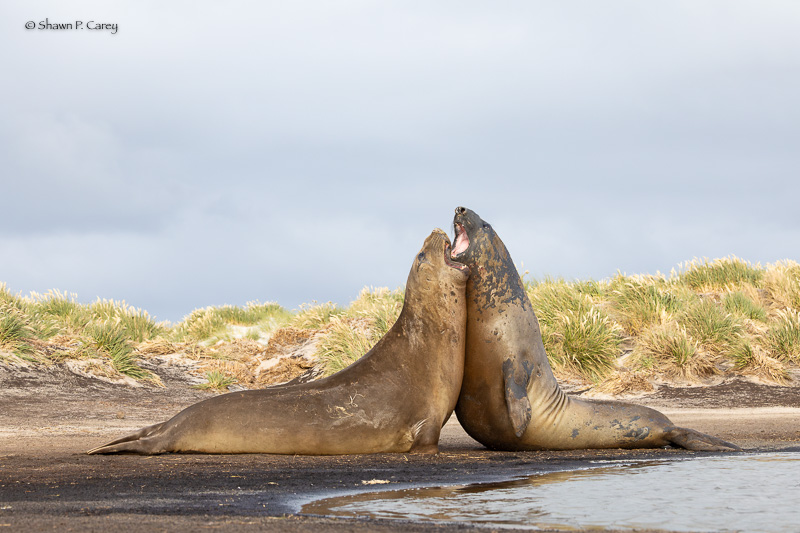
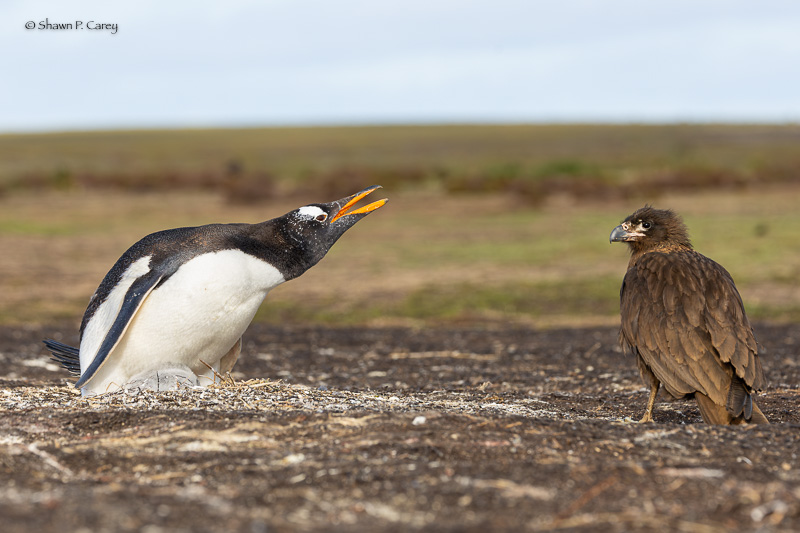
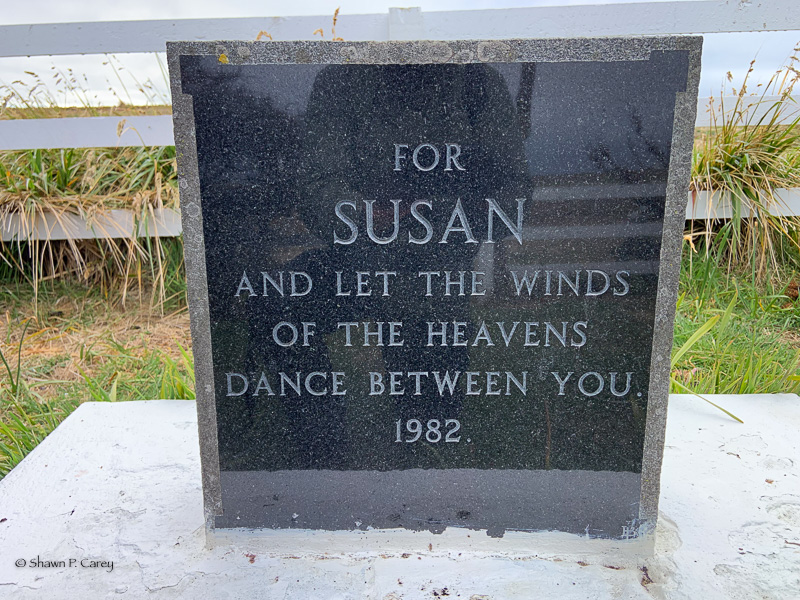
The other prime location for photography on the island is the South Beach. This is about a 10-15 minute walk from the lodge and will take you past another Gentoo nesting colony the second largest on the island. One thing you notice quickly when you are at any of the Gentoo Penguin nesting colonies are the Striated Caracara’s lurking on the outside perimeter. Earlier in the nesting cycle I’m guessing these Caracara’s might take a young penguin chick should the opportunity present. When we were there the young Gentoo babies where likely a bit to large at this stage plus the parents are very attentive, I never saw a baby alone. This colony provided a few opportunities with Gentoo nest that as a photographer you could isolate which made for some good photos. In the distance from this colony is one of two graves located on Sea Lion Island. The grave of Susan Whitley, a British civilian teacher who was tragically killed by a shell in Stanley (the only true city in the Falklands) on June 12, 1982, during the Falklands War, she was just 32 years old. She was also one of just three civilians killed during the war. At the request of her husband, she was buried in a small enclosure near the island’s vegetable gardens. I visited her grave one afternoon while exploring the area around the garden.
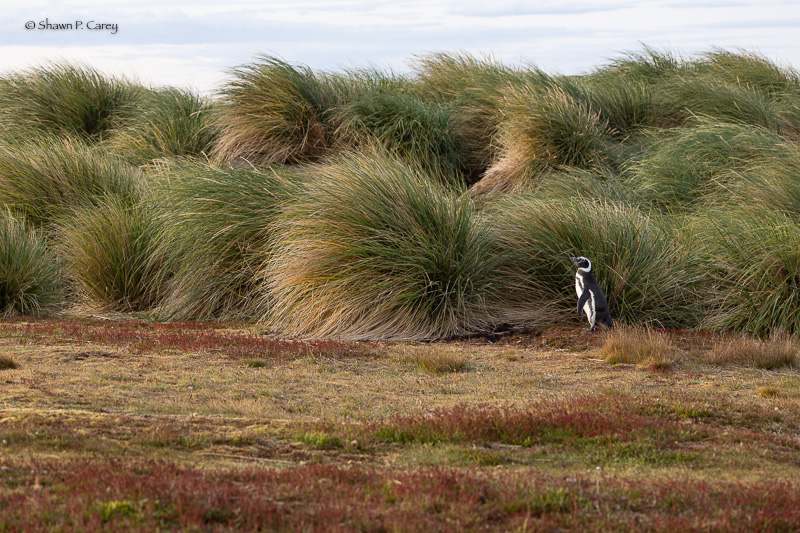
As you continue past the Gentoo colony towards South Beach you will encounter some Magellanic Penguins just on the edge of the Tussac Grass. Two points of reference for the Tussac Grass. First they warn you not to walk into the Tussac Grass because it’s possible you will get lost and have a difficult time finding your way out. Also because it’s so windy in the Falklands if you did get lost in the grass no one would be able to hear you. The other interesting fact about this grass on Sea Lion Island as it was explained to me, had I been there 15 years earlier there was virtually no large standing Tussac Grass to be seen. There were a few horses on the island and they keep all this native grass mowed down. After the horses were removed the grass slowly grew back and by the time I arrived you would have never know there was a problem. This now has additional benefits for the birds that call this island home including the endemic Cobbs Wren which I saw but was not able to photograph.
Eventually you end up at South Beach where you will encounter large numbers of Southern Elephant Seals. This will include females, first year young and sub-adult males. The young pups can be very curious and if you are sitting anywhere near them they might approach you. The really large males or “Beach Masters” as I mentioned had departed by the time we arrived in early December. South Beach offers some very good photography of these Elephant Seals and also has what is referred to as the Orca Pool. From an hill overlooking the beach on the far end is an area that when the tide is high Killer Whales approach looking to take an unsuspecting seal. I did see several Killer Wales patrolling the waters but never a kill of a seal. I’m guessing had I spent more time high on the cliff or overlook of the Orca Pool I may have seen a Killer Whale take a seal.
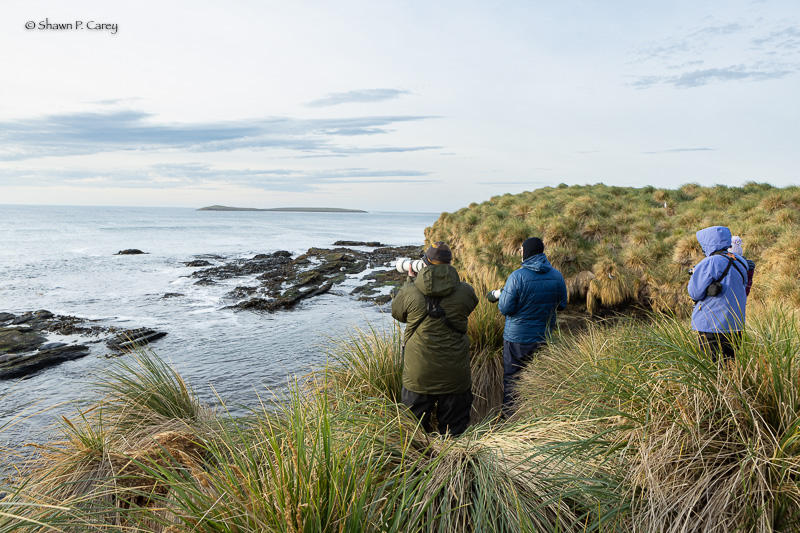
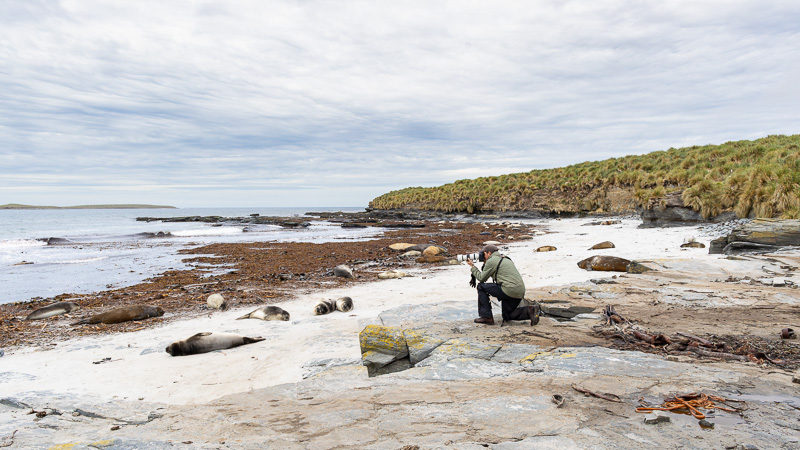
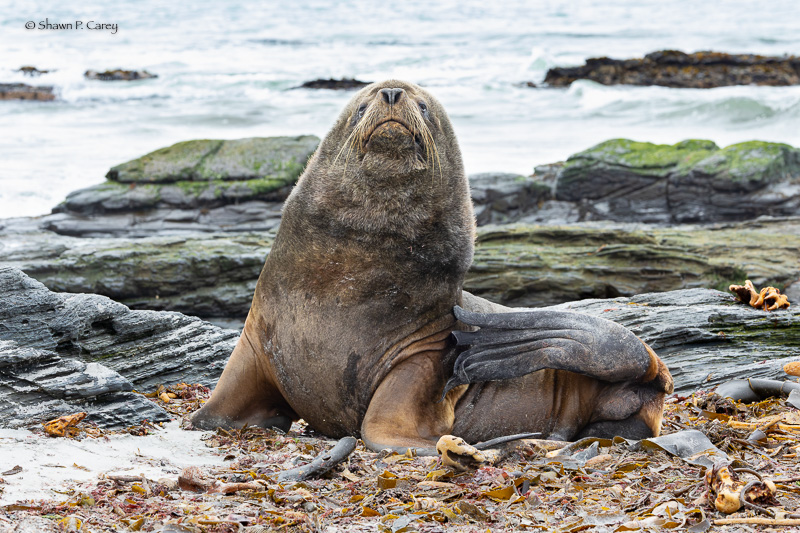
There are also Southern Sea Lions on Sea Lion Island, however there are more Southern Sea Lions on Bleaker Island which would be the next stop on my Falkland Islands adventure, more on that in Part IV. For my time on Sea Lion Island spent on South Beach there was one sub adult male Southern Sea Lion. He had been kicked out of the area where the large breeding males hang out so this sub adult was exiled to spend his time with the Elephant Seals. Needless to say he was not happy about this and earned the name “Mr Grumpy Pants”. While that is a bit comical I can assure you these male Sea Lions are not to be messed with and can be very dangerous. They are also amazingly quick and agile on land unlike the Elephant Seals which are lumbering and not quick at all. So, with “Mr Grumpy Pants” you needed to be aware at all times as to where he was resting and stay clear of him.
Other birds of interest on the island are four shorebirds: Magellanic Oystercatcher, South American Snipe, Snowy Sheathbill and Two-banded Plover. In addition you will see Brown Skua, Southern Giant Petrel, White-bridled Finch, Blackish Cinclodes, Austral Thrush, Dark-faced Ground Tyrant, Black-crowned Night Heron, Dolphin Gull, Kelp Gull, Ruddy-headed Goose, Upland Goose and Kelp Goose.
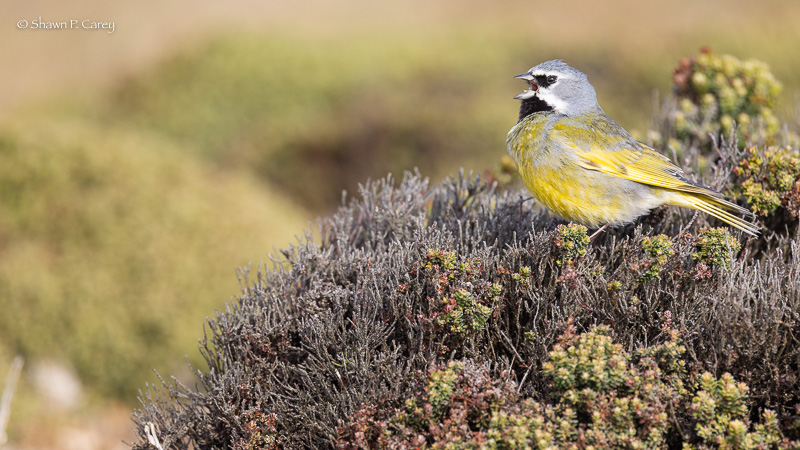
Canon R3, Canon 100-500mm
We were scheduled to be on Sea Lion for a total of three days but due to weather conditions the day we were to depart the flight was canceled until the following day. With one additional day on the island I made a point to explore one area I had not been which is a small pond located not far from the air strip. This was a spot my friend Mike said you could photograph some ducks including Speckled Teal, Crested Duck and Chiloe Wigeon. I spent about two hours at the pond and was able to capture my only photos of Chiloe Wigeon. This was the only time on this trip I wished I had my 600mm lens. For all other photos during this trip I primarily used my Canon 100-500mm and a 24-70mm. However on Sea Lion I also started using my Canon 24mm lens. This offered some of what I believe are my best photos from this tip.
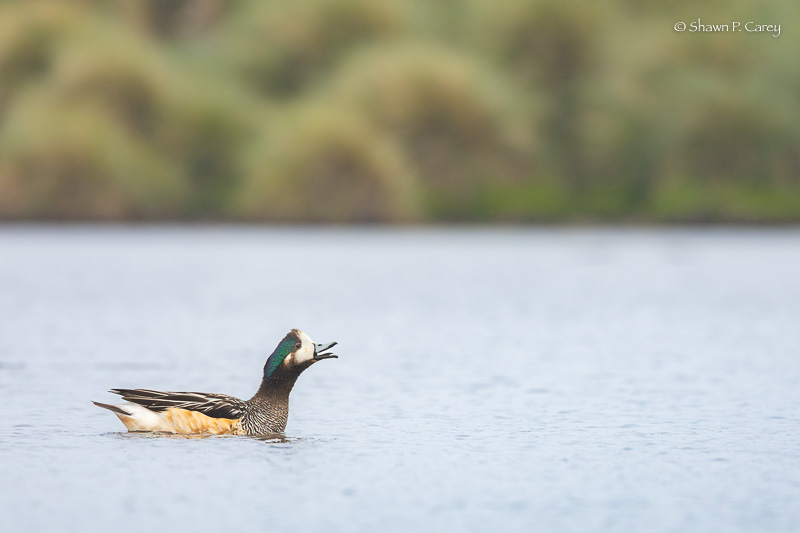
Canon R3 with Canon 100-500mm
There are three species of penguins that nest on Sea Lion Island plus a fourth that can sometimes be found there, Gentoo Penguin, Southern Rockhoppers, Magellanic Penguins and if you are lucky maybe a Macaroni Penguin. The Magellanic Penguins unlike all other penguins that nest in the Falklands are not ground nesters, they choose to dig holes in the ground much like Burrowing Owls that we see here in the US. Because the nest underground we did not see their babies. Despite that I found Magellanic Penguins to be very entertaining as they are quite vocal. Magellanic Penguins are famous for their unique, loud vocalizations, most notably a two-toned “hee-haw” sound like a donkey. Again check out my YouTube channel to see a short video of Magellanic Penguins.
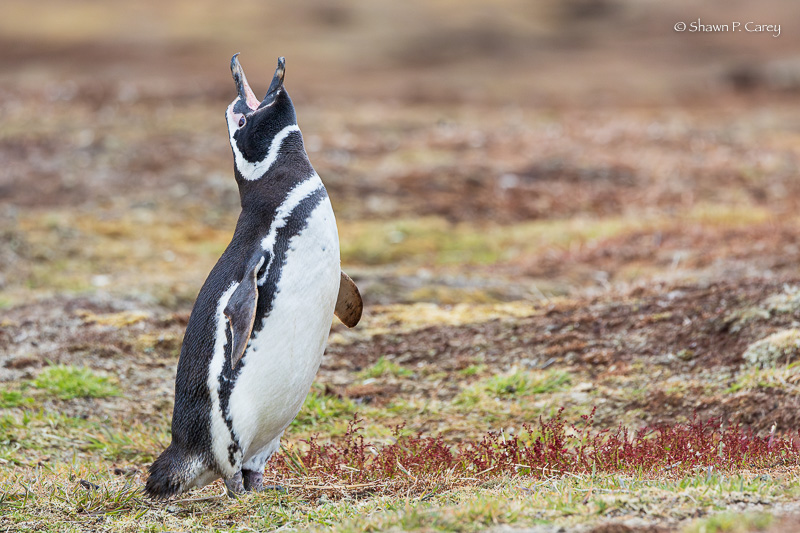
The third nesting penguin species is the Southern Rockhopper. However they nest on the other side of the island and while you could walk there it would be time consuming round trip. Most people visiting Sea Lion Island arrange for a ride from the staff which is how we ended up there on our last day and a few hours before we departed. It was not to see the Rockhoppers but instead for a chance to see a lone male Macaroni Penguin. The Falklands are the northern limit of their range. Estimates vary of 25 to 300 pairs total in the Falklands and having not seen one on Saunders Island we did not want to miss our chance of seeing one. So Micky Reeves drove us to the Rockhopper colony about two hours before we were due to depart for a quick view and photos of this lone male Macaroni Penguin. Unfortunately weather conditions were less than ideal but we did see and photograph our target as he stood dead center in the colony “holding court”. Because he was commanding the very center and up on the highest rock we nicknamed him King Tut.
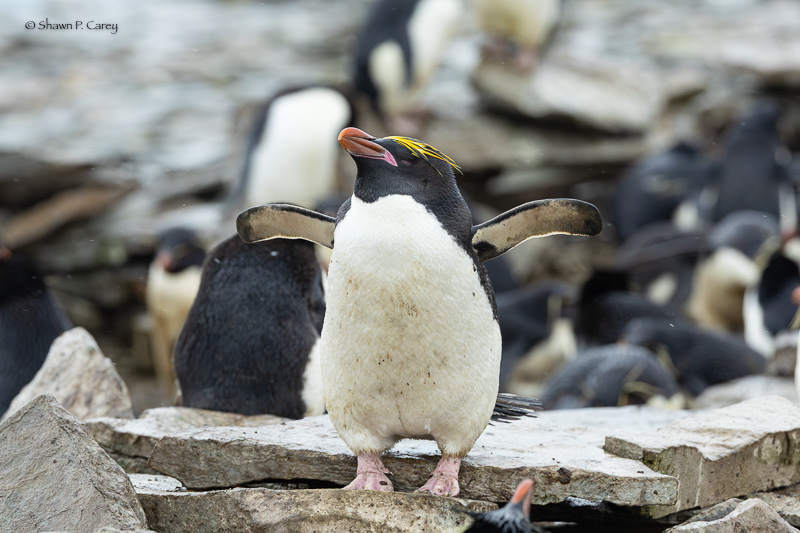
After departing the Rockhopper colony and seeing the only Macaroni Penguin we arrived back to the lodge and waited for our plan ride to our their destination Bleaker island.
In Part IV we will fly from Saunders Island to Sea Lion Island for even more great photos and videos on what was a fantastic photo adventure. Also Check out my YouTube channel Exploring The Natural World for some of my penguin videos.
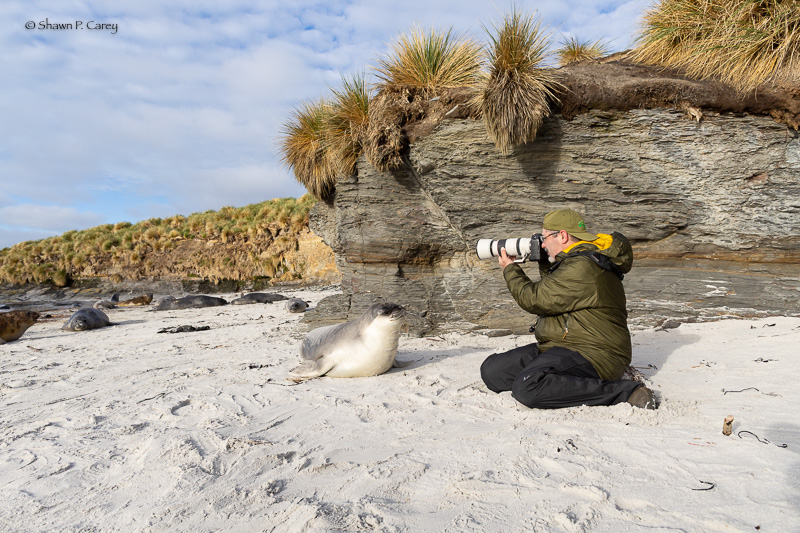

Canon R3 with Canon 24mm